ClinicManager
Free. No sign-up. Edit the Word file, or print the PDF as it is.
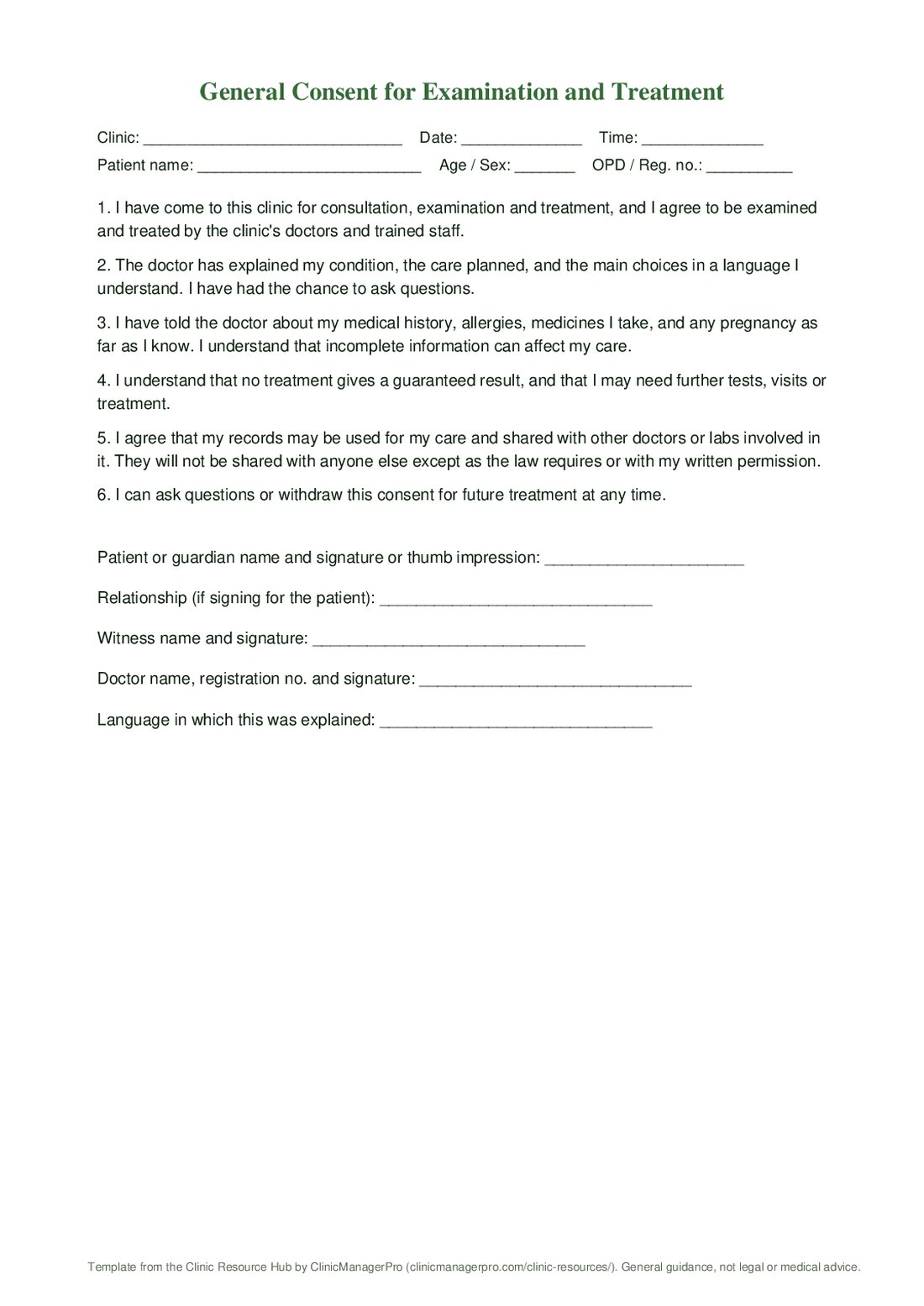
Written consent records that the patient understood what was planned and agreed to it. This pack has four plain-language forms you can adapt to your clinic.
What is in the pack
| Form | Use it for |
|---|---|
| General consent | Examination and routine treatment, usually signed at the first visit |
| Procedure or high-risk | A specific procedure, with space for the doctor to write the risks |
| Anaesthesia or sedation | Local, regional or general anaesthesia and sedation, with health history and fasting confirmation |
| Leaving against medical advice | Recording the advice given and the patient’s decision to leave (LAMA) |
How to use them well
- The doctor explains the plan in a language the patient understands before anything is signed.
- The doctor fills in the procedure and its specific risks. A form with the blanks left empty protects no one.
- The patient signs or gives a thumb impression. If the patient is a minor or cannot sign, a legal guardian signs. A witness signs too.
- Give the patient a copy and keep the original with the patient’s record.
These are general templates. Requirements differ by specialty, procedure and state, so have your own doctor or legal adviser review them before your clinic starts using them.
Frequently asked questions
Does a signed form replace explaining the procedure?
No. The form records the conversation. It does not stand in for it.
Who should sign for a child?
A parent or legal guardian, with their relationship to the patient written on the form.
Can I translate the forms?
Yes, and you should if your patients read another language. Note the language used on the form.
Part of the Clinic Resource Hub: general information for clinics, not legal or medical advice, and separate from ClinicManagerPro's product help. ClinicManagerPro is not a government body and this is not an official site.